

 Back
Back


 Free Delivery With Orders Over £60
 October Gardening Jobs
Posted by Shannen Godwin on 17th Jun 2021
Grow Your Own: Apple Trees
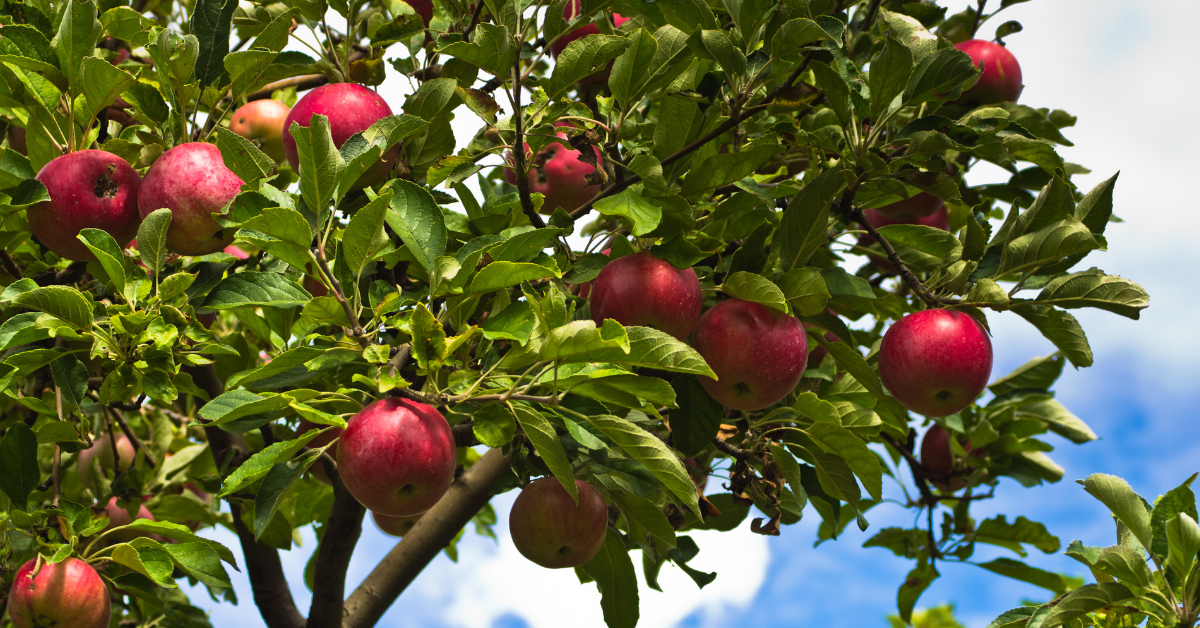
We are constantly reading on a daily basis about how the world is always changing in ways we can’t control. The world may change, become faster and more digital but something remains stable in the British garden: the apple tree. The opportunity to grow your own fruit is one which as a country we can’t seem to resist and one which brings endless joy when the harvest comes later in the summer and autumn.
Sitting in late summer, overlooking a beautiful and colourful garden (fingers crossed of course) we can think of few things better than enjoying some warm apple pie, smothered in custard and accompanied with fresh blueberries. Simply divine! Oh and the extra special treat is knowing we will have grown them ourselves, the fruits of our own labour (excuse the pun).
Both Ornamental and Practical Benefits
Their striking spring blossoms are a valuable bonus, but ultimately it is the crop from this mini fruit orchard that is appealing. The idea of going organic is one that has been around for a long time and provides many economic and health benefits. Getting back in touch with nature, while also saving you a little money can’t be bad at all.
While choosing the right apple tree may seem daunting because of the large variety available, we recommend you follow one simple rule – choose to grow the ones you like to eat! Many varieties have a popularity stemming back over 100 years, while other (possibly more unknown varieties) are more recent introductions.
The crop you will harvest from your fruit trees in late summer or early autumn, can generally be classified as either dessert or cooking. This will help indicate the use of the fruit and will ultimately help gauge which one is correct for you. Popular dessert varieties include Apple Discovery, Apple Fiesta, Apple James Grieves and Apple Laxton’s Superb.
Popular cooking varieties include Apple Bountiful, Apple Sunset and Apple Bramley Seedling (who can resist a lovely Bramley Apple Pie?).
Pollination – will it need a partner?
Most urban gardens will not require a pollination partner as partners are usually found in close proximity. For people in rural areas it is advised that you choose two varieties from either the same pollination group or one above or one below. Pollination will occur when the beautiful spring blossom appears on the trees and usually is carried out by garden insects and bees. The pollination process will help to encourage a larger crop of fruit and helps with the creation of fresh, nutritional apples.
We have chosen to sell only group B and C varieties to help with this, so each one will cross pollinate with another from our apple range. It’s important when choosing to grow your own fruit trees that you choose good quality, established trees. We supply hardy two year old trees, grafted onto dwarf root stock called M26. Many cheaper alternatives supply the smaller M27 root stock, which is unreliable and will only produce a fraction of the fruit that the M26 will.
How to Plant Apple Trees
– On arrival first thing you need to do is soak the roots in a bucket of water for two hours or overnight if possible, to ensure that prior to planting the roots will soak up as much moisture as possible to get them started.
– Choose a location that has access to full sun as the more sun they get, the healthier the tree will grow. It is also best to plant in areas with good shelter to reduce damage from winds.
– Dig out a hole large enough to hold the roots fully, without cramping them. Apple trees will tolerate most types of well drained, fertile soil. It is highly recommended that you add a little manure or a little multi-purpose compost when planting.
– Place the two year old tree into the hole and start to fill in around the roots. Fill in firmly and make sure that no air gaps exist.
– Stake the tree to make sure it is kept stable and that it won’t be damaged by any unexpected winds. Always tie the tree to the stake low down so the tree can move in the wind but the roots will still be firmly held.
– You can also grow individually in large pots but it will reduce the fruiting of them slightly.
Aftercare
– Apple Trees can grow as high as 12m but you don’t have to have it that high, you can prune each year to keep at a more manageable height. Each year, usually in late winter or early spring, bring the top crown down and keep to a nice height about 6/8 foot.
– Young trees must be watered thoroughly and you can sprinkle with fertilizer each spring.
– You can also mulch in April with rotted manure or compost around the base of the trunk.
-They will blossom and flower in spring and fruit is normally ready to be picked throughout late summer or early autumn. Don’t be tempted to pick your fruit too early. You can gauge their ripeness by gently twisting them as a ripe apple will easily part from the spur.
Shop our full range of apple trees online.